

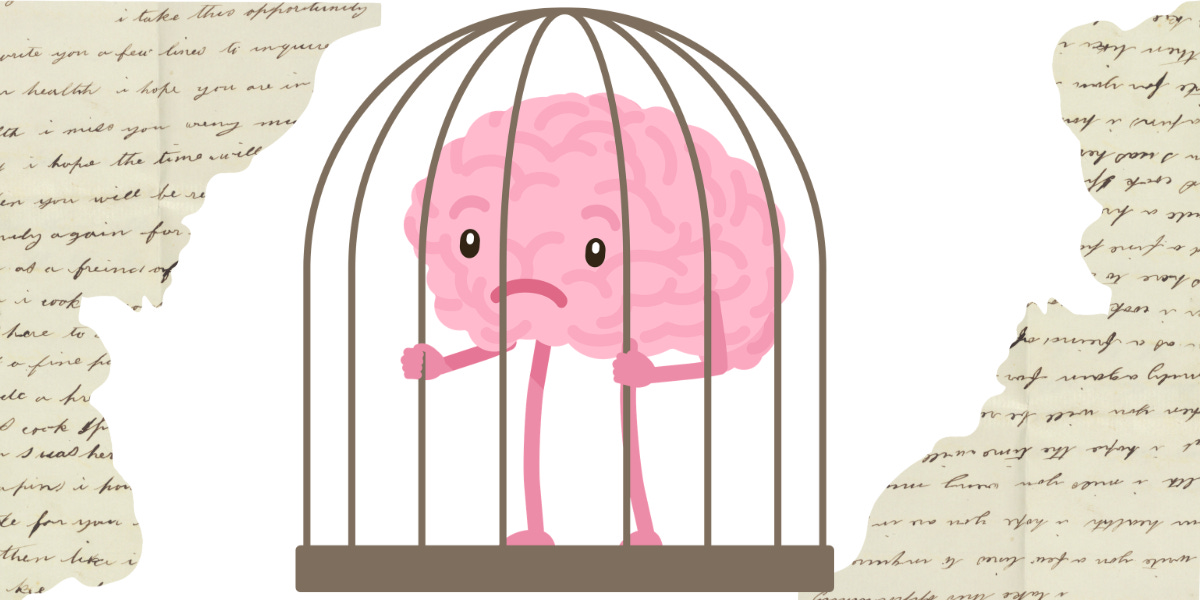
Meet Sarah
If you saw Sarah leading her ministry team on a Tuesday morning, “captive” is the last word you would use to describe her.
As the head of her church’s Women’s Ministry, she leads a vibrant community of hundreds of women. She teaches the weekly Bible study, organizes the annual retreats, and mentors younger women stepping into leadership. She is articulate, deeply grounded in the Word, and looks like the picture of grace under pressure. Women look up to her as the anchor of the community.
But if you looked closer at the “boundaries” Sarah has secretly built around herself, you’d see a woman behind bars.
After years of feeling let down, overwhelmed, and criticized, Sarah has built what the world would call “strong boundaries” to protect herself.
Boundaries that look like:
“Never letting them see me struggle, or they’ll think I’m weak.”
“Saying yes to every request from senior leadership, because my worth depends on my usefulness and availability.”
“Don’t ask for help; it’s easier to just do it myself.”
Any of this sound or feel familiar to you?
Sarah thinks she’s protecting her peace, but in reality, she’s suffocating, drowning under the weight of what she perceives to be everyone’s expectations of her, including God’s and her own.
She goes to bed at night exhausted, her husband and family getting what’s left of her after she’s done serving others.
Her heart is bound not by the peace of God, but by the fear of man.
She’s a leader set apart for a kingdom assignment, yet she’s living like a prisoner behind bars.
She’s allowed the worldly strategies of self-preservation and self-dependence to dictate her boundaries, completely forgetting that the One she serves didn’t call her to hide behind a wall of fear and isolation - He called her to walk in the freedom His Son paid for.
Luke 4 v 18
“… He has sent Me to proclaim freedom for the prisoners …”
The Problem with The Wrong Boundaries
It must be said that the modern-day world is obsessed with setting boundaries.
They’ll tell you boundaries are about self-preservation, independence, and keeping people at bay. They operate on the flawed premise that if you want something done right, you must do it yourself.
When Christian women in leadership set boundaries according to the dictates of the world, rather than feeling fulfilled, protected and at peace, we soon begin to feel bound instead of experiencing the peace and freedom that Christ died for.
Sadly, often without realising it, many Christian women in leadership are still operating within worldly boundaries that imprison them, rather than within godly boundaries that set them free by protecting their identity, purpose and calling in Christ.
The world builds boundaries based on fear, self-protection and independence. but the word of God says our boundaries should be based on love, stewardship, and dependence on God.
Romans 12 v 2
Do not be conformed to this world but be transformed by the renewing of your mind.
In other words, stop thinking about and implementing boundaries like the world does and start following the example Jesus set for us.
We are called to reflect His image and likeness to a broken world. That cannot be achieved when we try to fulfil our godly calling using a worldly compass.
Jesus’s example of breaking and setting boundaries
Jesus wasn’t afraid to break down boundaries.
One example of this can be found in John 4 where we see Jesus resting at the well of Jacob after a long journey and the Samaritan woman comes along to collect water.
Instead of adhering to the religious rules of the day which said a Jew should have no contact with a Samaritan, let alone a woman, Jesus promptly engages with her and goes on to break all cultural, gender and religious boundaries (rules) by doing so.
He knew that she needed what only He could give - living water. For her to receive that, boundaries (rules) needed to be broken.
Jesus also maintained godly boundaries.
Throughout the Word we also find Jesus routinely withdrawing to lonely places in order to pray and spend time with the Father.
He was never afraid to say “no” to anything that didn’t align with who He was and what His mission was.
Jesus broke worldly boundaries to love and minister to people, and built godly boundaries to protect His identity, purpose and calling.
We should be doing the same!
What are the mindsets that keep us bound?
According to the latest research based on keyword searches by Christian women in leadership and community platforms in 2026, the top five mindsets keeping them captive are:
1. The fear of being vulnerable – They believe if they keep people at a distance so they don’t see their struggles, they’re protecting their image and being professional.
2. People-Pleasing – Believing that servant leadership means saying “yes” to every request or demand made of them. When actually, they’re creating boundaries that may be hindering God’s specific assignment for them by taking on more than they are meant to.
3. Self-reliance – Refusing to ask for help or delegate because “it’s easier if I just do it myself.” Think about that for a moment – is it not possibly pride disguised as a strong work ethic?
4. Perfectionism – Believing that their worth lies in them doing everything perfectly with no room for error. In doing so they’re teaching those they lead that nothing short of perfection from them will do either.
5. An unteachable spirit – Becoming defensive when faced with feedback or constructive criticism to protect their ego. Often mislabelled as “protecting my peace.”
When we set boundaries with a worldly mindset, we become leaders who may look successful on the outside, but internally we become captives to feelings of exhaustion, anxiety and unworthiness.
As long as we continue to profess Christ but still conform to the way the world does things, (our old Adamic nature), we will continue to try and set boundaries that will ultimately rob us of the joy, fulfilment and freedom we are meant to experience.
What happens when we dare to break boundaries?
Here I want to share a couple of examples from my own life.
I had immigrated to South Africa from England with my parents in 1964. I was 3 at the time.
For those of you who know anything about the history of South Africa, you will have heard all about Apartheid. A time in our country’s history when white and black were forbidden to mix among many other atrocities.
As a young child I could never understand this, even at a young age it just seemed wrong to me. As a result we grew up with a fear of people who were different from us.
Later, in my work with Child Evangelism Fellowship, being the director of the ministry in the Free State and Northern Cape provinces, I had many opportunities to work with people from different cultures. Indeed, some of them came to be my best friends.
On one occasion I had arranged a training to train new teachers some of whom came from far away and needed accommodation.
After speaking to my husband and children about it, we decided that we would invite some of them to come and stay with us in our home. There were six African men that came and spent the week with us and we arranged for the women to stay with friends.
Some months later, while I was teaching at the Children’s Ministry Institute, one of those who had spent the week with us came to me and said:
“Aunty Jane, I just want to tell you what that week had meant to me – it completely changed the way I feel about white people”.
On another occasion I was invited to preach at a church in a township and train their Sunday school teachers. The black Pastor of this church invited my husband and I to come and stay at his home with his family. This would be one of my first experiences of going to a township, but I had no hesitation in accepting his request, trusting that the Lord had everything under control.
I had no idea what type of home he lived in, many people in townships live in tin shacks, but I was confident that all would be okay. As it turned out he lived in a much bigger and fancier house than we did 😊
The Pastor went on to tell his congregation how impressed he was with this white woman for accepting his hospitality when she had no idea what to expect or where she would be staying. It made a lasting impact on him and to this day we are still in contact.
In these two instances racial boundaries were being broken and only eternity will tell how many souls were saved because someone dared to break down worldly boundaries.
If I had listened to many of my white friends and even some leaders, I would never have entertained either of these situations as they were deemed dangerous and irresponsible.
How do we break the wrong kind of boundary?
There really is only one way – to abide in Christ.
As long as we continue to try and set boundaries using a worldly compass, we’ll experience times of feeling exhausted, discouraged and unworthy instead of experiencing the joy and fulfilment that is meant to be ours.
We need to have our minds renewed – moving from seeing boundaries as a way to protect ourselves from worldly judgement and proving our worth, to seeing them as a way of protecting our identity, purpose and calling in Christ.
When we are confident in our identity and authority as God’s children and learn to embrace our purpose of reflecting His image and likeness to the world, we’ll be able to confidently fulfil the specific calling that God had planned for us since the beginning.
Back to Sarah
If you think back to the story of Sarah in the beginning – do you think her boundaries were helping or hindering her calling?
I believe that if we look closely at Sarah’s life, her boundaries were hindering her calling, even though she mistakenly believed they were helping her survive it.
By building walls of perfectionism, people-pleasing, and self-reliance, she wasn't protecting her ministry; she was insulating herself from the very body of Christ meant to sustain her.
I would love to hear from you in the comments - what is the no.1 piece of advice you would give to Sarah?
No Condemnation
If you find yourself identifying with Sarah, I want to remind you that in Christ, there is no condemnation.
I don’t know about you but no church I’ve ever attended has taught about setting godly boundaries, but, as the old saying goes: “when we know better, we do better.”
Christ understands that we have spent a lifetime of living in the “old man” until we came to Him.
Learning not to be conformed to this world and being transformed through the renewing of our minds (Romans 12 v 2) is a process.
The best thing about that is that it’s not all up to us, He is the one doing the work in us, we get to cooperate with Him.
Keep a look out for an upcoming article where I’ll go deeper into the practicalities of how we can break those boundaries that keep us captive so we can enjoy the freedom that Christ died to give us.
Don’t forget to share your no.1 piece of advice to Sarah in the comments.