

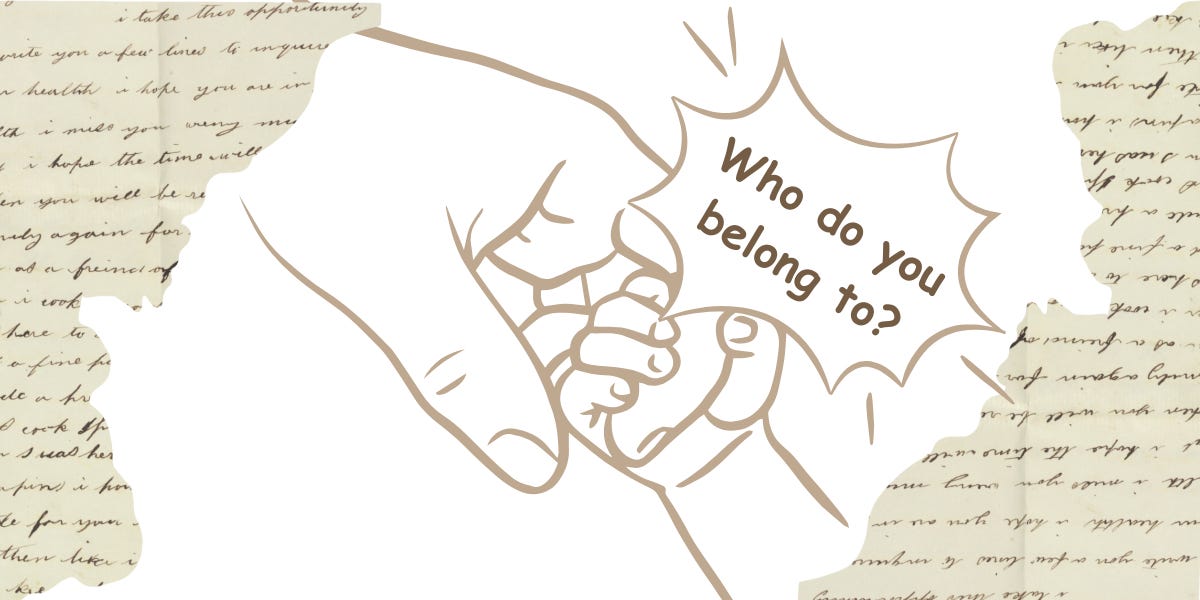
I remember how, as a teenager, I often felt embarrassed to be seen out and about with my mother.
Not because she was a mean person, had a bad reputation, or any other obvious flaw, but because of the clothes she wore. It felt like nothing she wore ever matched and her wardrobe was so obviously of the “more affordable” end of the fashion chain.
I didn’t want to be identified as her daughter for fear that people would take one look at me and say: “She looks just like her mother!”
My mother’s way of dressing and carrying herself, had a direct impact on how I saw and carried myself.
I grew up “wearing” the identity of my earthly parents, and I believed that if anyone looked at me, they would immediately be able to tell who I belonged to.
As I was writing that last sentence, a memory popped into my mind of something that kind of proves my point.
In-between my work as a full-time children’s missionary and me taking my calling to write seriously, I worked for 13 years as a live-in carer in the UK
One day I had some extended time off and I’d arranged with my daughter who happened to be in the area, to meet up so we could spend the morning together. She arrived at the lady’s house where I was working (with permission of course) and immediately when she saw my daughter, she said:
“ I can see who you belong to”!
Granted, she wasn’t referring to how we dressed, but to our features that are very similar.
But my own sense of feeling inferior because of who I was associated with as a teenager, would accompany me well into adulthood and I’m sure, in fact I know, it impacted the way I showed up as a wife, mother and eventually as a leader.
Worldly Identity vs Godly Identity
I believe most of us go through life with the worldly identity we inherit from our parents.
Our character, our mannerisms, the way we think and speak, even our achievements in life are all influenced by our parents to some degree.
Then, when we get married and have children, our sense of identity changes again. Just as our parents influenced us growing up, now our spouse and our children do the same.
If you have a spouse that battles an addiction or chronic struggle of some kind, his or her behaviour can have a devastating effect on the way we see both ourselves, and the way we think the world sees us. The same is true of our children.
How often have we heard it said, or even said ourselves:
“If that’s how the children behave in public, I can just imagine what it’s like at home”, and we either consciously or subconsciously hold the parents responsible for their child’s behaviour.
And while our worldly identity forms an integral part of who we are, we cannot allow it to become our dominant identity.
Identity is Your Source of Authority
When we define ourselves by our proximity to others, no matter who they are, we’re essentially giving away our authority. We’re allowing them to have the final say.
This makes our identity fragile. If the marriage struggles, the children rebel, or the family dynamics shift, then our very foundation cracks.
When we bring this “brokenness” into our leadership, we lead from a place of people pleasing and fear of rejection, because our worth is tied to how well we manage those relationships and live up to the expectations of others.
Then we wonder why it is that we often start to feel like we’re drowning under the weight of those expectations.
A Shift in Identity
Whereas a worldly identity is anchored in trying to prove our worth to others, a Godly identity allows you to fully understand and embrace your identity as daughter of God.
Then your life and your leadership become more about your position and authority in Christ, and less about performing for approval.
Colossians 3 v 23
Whatever you do, work at it with all your heart, as working for the Lord, and not for human masters.
When a woman knows she is fundamentally a daughter of God, she no longer looks to her parents, her husband, her children, or her position within the church to define who she is.
She shows up in every area of her life with a quiet confidence and authority because of Whose identity she wears.
The benefits of wearing the right identity
In general, the world expects a woman to live up to the idealized image that men, culture, and the church have created as an example of what a “good woman or wife” and a “capable leader” should look like.
The problem with this is that it forces women into a mold they were never created to fit into.
It causes them to try and project an image of perfection that pleases people, but slowly drains their souls.
Understanding your God-given identity will help you:
Understand your purpose:
Your purpose is simple: to reflect His image, not to meet a human standard.
You are created in the image of God to bear His character to the world. Your purpose isn’t a checklist of tasks to achieve; it’s a state of being.
When people look at your life, your marriage, your parenting, and your leadership, they should be able to say: “I can see who you belong to.”
Fulfil your calling
Calling is often viewed as serving mankind, and while serving people is good and necessary, and most certainly part of what we are called to do, the worldly perspective perspective of a calling keeps the focus on my effort, my impact, and their response.
If the ultimate goal of your calling is centred around serving people, you’ll soon find yourself crossing boundaries to fix, rescue, or please them, resulting in both physical and spiritual burnout.
Your calling is the specific, customized vehicle God gives you to fulfil your core purpose, reflecting His image and expanding His Kingdom. For me, in this season, and for the specific assignment God has given me, that vehicle is being a Kingdom coach and writer.
When you understand this then it becomes less about you and more about Him.
So if your calling is the specific vehicle God has given you to fulfil your purpose, your home, your relationships and your ministry are the territory where you carry out your calling.
Set Boundaries
When you’re confident in your identity and understand that the “assignment” comes from God and not from man, it enables you to set boundaries without guilt.
Boundaries that are not about keeping people out, but about honouring and protecting your identity, purpose, and calling as His daughter.
You can read more about setting godly boundaries here.
To Summarize:
When your identity is firmly anchored in your position as daughter of God, your purpose shifts from people-pleasing to reflecting His image and your calling becomes a disciplined vehicle with which you fulfil your purpose.
Conclusion:
Unlike as a teenager I didn’t want to be identified as my mother’s child, as a child of God it is my ultimate purpose – that people would look at me and say:
“I can see who you belong to!”
Not for my glory, but for the glory of my Heavenly Father.
The identity you “wear” has a direct impact on how you show up as a woman, wife, mother and leader.
Setting Godly Boundaries

Years ago, in our younger days, my husband and I were friends with a couple we’d met through a woman I used to work with.
Till next time, Unveiled blessings,
Whatever you do, work at it with all your heart, as working for the Lord, and not for human masters. That verse is repeated more than once in my house.